Endangered Species
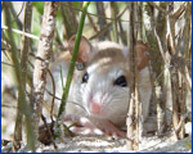
ANASTASIA ISLAND BEACH MOUSE, Photo Credit: Ponce de Raton™
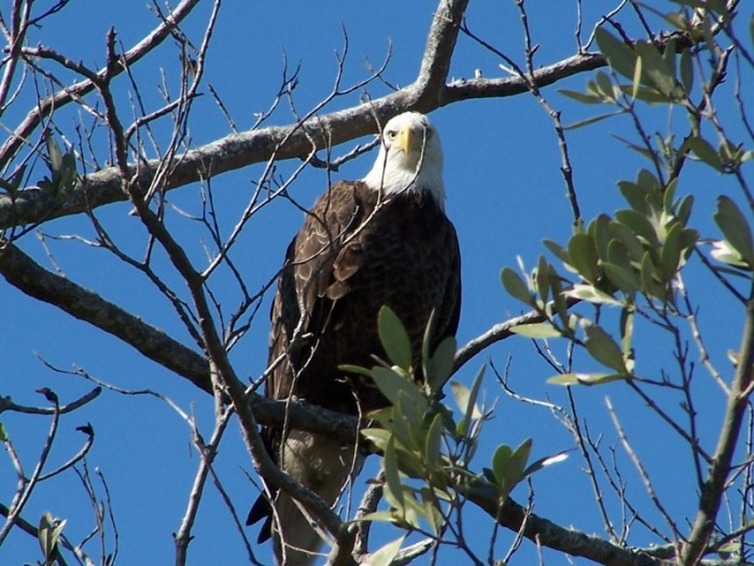
In 1776, John Adams (who later became the President) suggested the bald eagle be America's national symbol of freedom. The dove was suggested by Thomas Jefferson, and the turkey was suggested by Benjamin Franklin.
There are nesting pairs of bald eagles within St. Augustine city limits and at least 26 nesting pairs of bald eagles in St. Johns County. One nest is 120 years old and some 6 feet in diameter. The bald eagle is not bald at all. Her head and neck are brown until about 4 years of age, when she acquires white head feathers. Many bald eagles seen in Florida are juveniles or sub-adults, and have brown heads. Bald eagles spend the winter in Florida and spend the summer further North.
On October 8, 2001, an eagle nest tree was cut down leaving the eagles circling overhead. In 2008, a local realty company pled guilty to violating laws against disturbing bald eagles, and agreed to turn over 15 acres of land as reparation.
The Jacksonville Times-Union has reported that the realty company is having trouble finding a government agency to accept the land as part of its plea bargain agreement.
Hmmmmm? The St. Augustine National Historical Park and Seashore Act authorizes the federal government to accept suitable land from developers and realty companies for the park.
The St. Augustine National Historical Park and Seashore will help protect bald eagles, (America's national symbol), animals and plants, and threatened dynamic ecosystems like the St. Johns River, Northeast Florida's most important economic asset which is imminently threatened for this generation and future generations.
Also included are our whales, tortoises, beach turtles (endangered throughout Florida) as well as two animals native only in Northeast Florida: the Anastasia Island Beach Mouse (Peromyscus poliontus phasma) and a butterfly that lives around the St. Augustine Lighthouse at the top of Red Maple trees.