Emerald Necklace of Parks
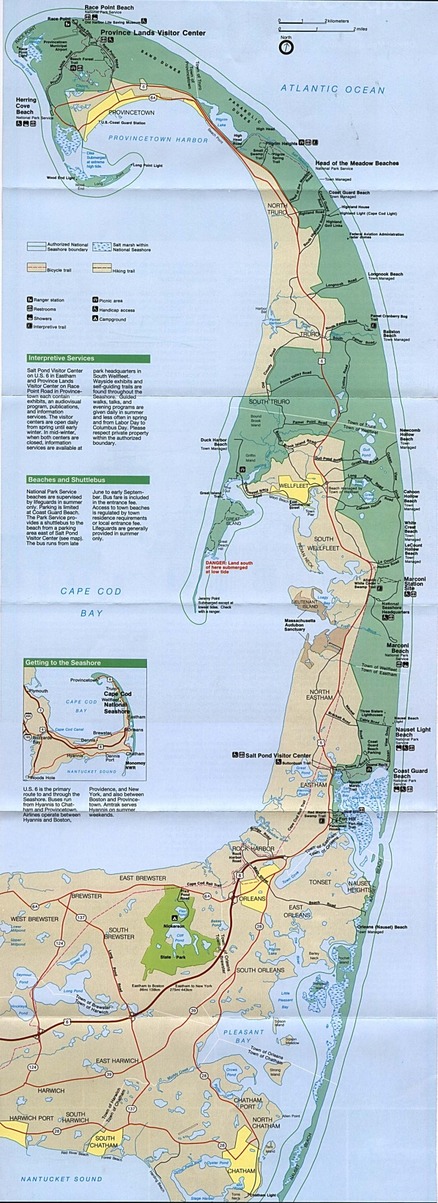
President Kennedy helped turn four state parks and 40 miles of beaches into a national treasure, the Cape Cod National Seashore.
St. Augustine has a once in a lifetime opportunity to endeavor to be a benchmark for Historical Landscape Preservation.
"Make no little plans, for they do not inspire people to carry them out."
Daniel Burnham, architect of Union Station in Washington, D.C.
Can you envision a National Seashore right here along our coast? St. Augustine would be the 11th National Seashore along our America coastline. With 61 miles of beaches from Ponte Vedra to Marineland, the St. Johns River and the St. Johns Riverkeeper, five state parks (Guana-Tolomato-Matanzas National Estuarine Reserve or GTM-NERR, Anastasia State Park; Deep Creek State Forest; Faver-Dykes State Park; Fort Mose State Park; Watson Island State Forest); the St. Johns River Water Management District's Twelve Mile Swamp, Deep Creek, Matanzas Marsh, Moses Creek and Stokes Landing reservations located in St. Johns County, Florida; the Castillo de San Marcos National Monument and the associated Cubo Line and St. Augustine City Gate sites; Fort Matanzas National Monument; the Plaza de la Constitutión (Slave Market Square); Government House and State Historic properties . . .
The movie, "Our National Parks: America's Best Idea Ever," produced by Ken Burns tells great stories about what America's most unique landscapes have meant to Americans just like you and the challenges they faced in protecting them.
For example, Thomas P. O'Neill, Jr., co-sponsor of the legislation for the Cape Cod National Seashore, wrote in his memoirs:
"To anyone who would listen, we pointed out that [a National Seashore] would preserve the beauty of Cape Cod and would increase tourism. The magnificent .... unbroken beach was one of the great marvels of this country, and it would be criminal not to protect it from commercial development. At that time, there were no more than 26 miles of public beach in all of Massachusetts. And although in 1958, nobody talked much about ecology and the environment, we pointed out that the area we wanted to save included moors, marshes, forests, and freshwater ponds---home to many species of birds, fish, animals and plants."